Switch 2 still suffers from drift issues, while third-party manufacturers accelerate technological innovation
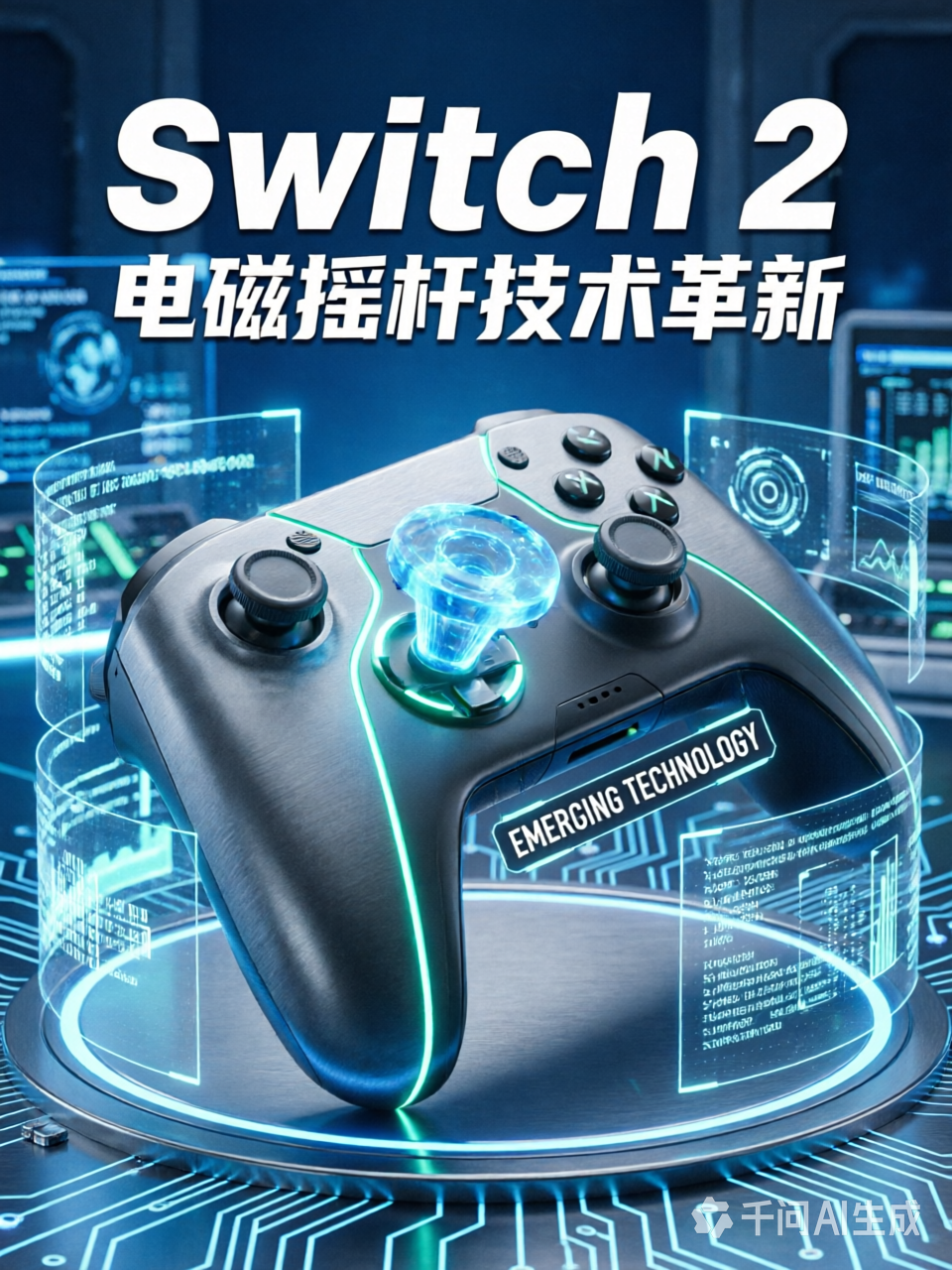
As Nintendo's new generation console, Switch 2, continues to expand in the global market, controversy over its hardware design has also emerged. Despite improvements in the appearance and magnetic structure of the new generation Joy-Con controllers, multiple disassembly and user feedback confirm that they still use traditional carbon film potentiometer joysticks, which have not fundamentally solved the persistent issue of "joystick drift" that plagued the previous generation. Faced with this historical pain point, third-party accessory manufacturers are accelerating the innovation of new technologies such as electromagnetic induction, attempting to provide players with a breakthrough solution through hardware replacement.
New console, old concerns: Carbon membrane structure remains unchanged, drift risk persists Since the release of the Switch 2, the durability of the new controller has become a focal point for players. Early analysis by iFixit, a renowned disassembly organization, pointed out that the internal core components of the new Joy-Con are basically similar to their predecessors, which means they still face the risk of signal mis-triggering caused by carbon membrane wear and dust intrusion. In fact, some early adopters have reported cases of joystick drift upon unboxing on social media. Although Nintendo currently provides free replacement services for controllers within the warranty period, the cycle of "fixing and breaking again" and the high replacement costs after the warranty period still deeply concern core players.
Technological Breakthrough: TMR and Hall Effect Become the "Killer Weapon" of Third-Party Peripheral Manufacturers. At a time when Nintendo has not yet completely revolutionized its native hardware, third-party peripheral manufacturers are filling the market gap through technological upgrades. GuliKit, a well-known domestic peripheral brand, has taken the lead in announcing that it is fully developing a magnetic joystick replacement module compatible with Switch 2. It is reported that to avoid potential magnetic interference caused by the strong magnets built into the new controller, GuliKit plans to adopt a new generation of TMR (Tunnel Magnetoresistive) electromagnetic joystick technology. This technology not only offers higher precision and lower power consumption but also completely eliminates drift issues caused by carbon film wear through non-contact sensing principles.
Meanwhile, multiple manufacturers such as NYXI, abxylute, and NACON have also launched Switch 2 compatible controllers equipped with Hall effect sensors. These products enable non-contact control through magnetic induction, enhancing anti-drift capabilities and service life, while also providing players with a more cost-effective alternative.
Industry Trend: Electromagnetic Joysticks May Become a Standard Feature in the Future The stagnation of Switch 2 joystick technology reflects the struggle between traditional manufacturers in cost control and user experience. However, market feedback is forcing industry changes. Currently, electromagnetic joystick technology has evolved from early "player DIY modification" to "official standard equipment for complete machines". For example, ROG's latest Xbox Ally X20 handheld console is directly equipped with the Grain TMR joystick, and brands such as Corsair and Backbone are also actively introducing related solutions.
Analysts point out that with the increasing demand for hardware durability from consumers and the tightening of regulations against "planned obsolescence" globally, upgrading from traditional carbon film potentiometers to non-contact electromagnetic induction solutions has gradually become an irreversible development direction in the gaming hardware field. In this technological innovation led by third-party manufacturers, players are ushering in a new era of more stable and smooth control.